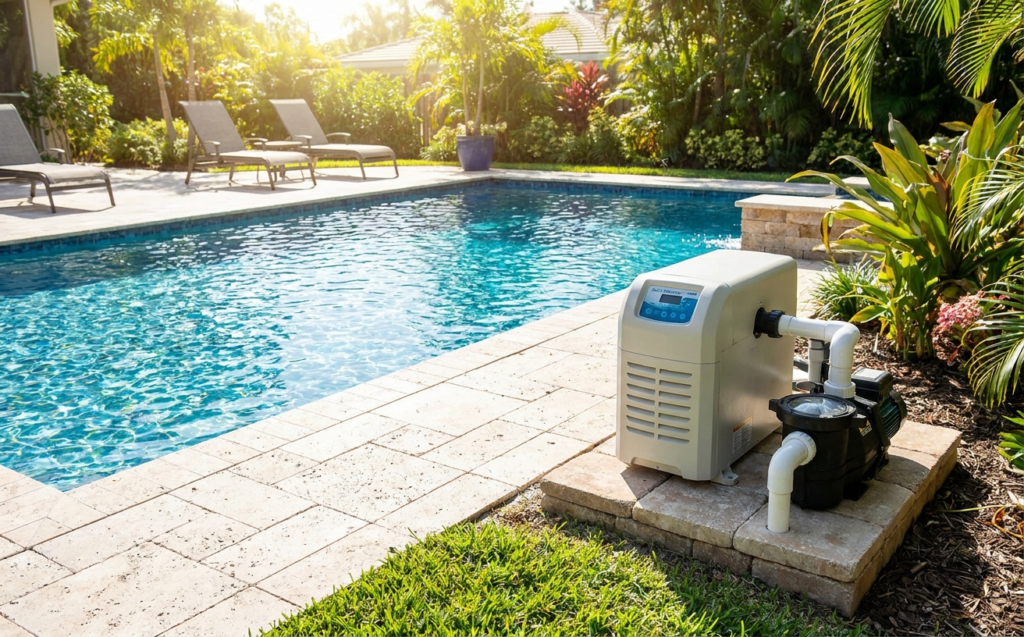

Saltwater pools have grown from a niche alternative to a mainstream choice. Roughly one in three new residential pools now uses a salt chlorine generator instead of manual chlorine addition. The appeal is obvious: softer water, less chemical handling, and a more consistent chlorine level.
What is less obvious is how the saltwater environment affects the equipment that operates in it. Salt is corrosive. It accelerates the degradation of metals, rubber, and certain plastics. Any device that spends hours submerged in saltwater must be designed to withstand that environment, and not all cleaning equipment is.
The Corrosion Factor
Saltwater at the concentration used in residential pools — typically three thousand to five thousand parts per million — is mildly corrosive to many common materials. Stainless steel fittings develop surface rust. Rubber seals lose elasticity faster than in freshwater. Electrical connections corrode if any moisture penetrates the housing.
The corrosion is slow. It does not destroy components in weeks or months. But over two to three years of regular use, the cumulative effect on a device not designed for saltwater can be significant. Seals that last five years in freshwater may fail in three years in saltwater. Metal fasteners that remain pristine in freshwater may develop corrosion that weakens their hold.
The key specification to check is whether the cleaner is rated for saltwater use. Manufacturers who design for saltwater environments use marine-grade stainless steel, salt-resistant rubber compounds, and sealed electrical compartments. These materials cost more, which is why saltwater-rated cleaners often carry a price premium.
Scale Formation on the Cleaner
Salt chlorine generators raise pH continuously as a byproduct of the electrolysis process. Higher pH promotes calcium scale formation, and scale deposits appear on every surface in a saltwater pool — including the surfaces of a cleaning machine.
Scale on the drive tracks reduces traction and causes the cleaner to slip on walls. Scale on the brush housing increases drag and reduces scrubbing effectiveness. Scale inside the filter chamber restricts water flow and forces the pump to work harder. The net effect is a machine that performs progressively worse as scale accumulates.
Regular descaling — soaking the affected components in a mild acid solution — restores performance. But this is an additional maintenance step that freshwater pool owners do not need. If you own a saltwater pool and a cleaning machine, plan to descale the unit monthly during the swimming season.
The Salt Cell and Circulation
Salt chlorine generators require consistent water circulation to distribute the chlorine they produce. If circulation is poor, chlorine concentration is high near the cell and low in dead zones. A cleaning machine that stirs the water as it moves contributes to circulation and helps distribute chlorine more evenly.
This benefit is incidental rather than intentional — the cleaner is not designed as a circulation device — but it is real. Pools with poor circulation that develop dead zones often see improved chlorine distribution after adding a cleaner that runs regularly.
The flip side is that the cleaner must not block the flow through the salt cell. A robotic pool cleaner operates independently of the pool’s plumbing and does not interfere with the salt cell’s operation. Pressure-side and suction-side cleaners, which connect to the plumbing, can reduce flow through the cell if they restrict the system’s overall throughput.
Electrical Safety in a Conductive Environment
Saltwater is more conductive than freshwater. This matters for any electrical device that operates in the pool. A cleaning machine with a low-voltage power supply that is safe in freshwater may present a different risk profile in saltwater if the housing seal fails and the internal electronics contact the water.
All reputable cleaners use low-voltage DC power supplies — typically twelve to twenty-four volts — that are inherently safe in water. The risk is not electrocution but equipment damage. If saltwater penetrates a seal and contacts the motor or electronics, the conductive environment accelerates the short circuit and corrosion damage.
Inspect the power cable and housing seals regularly in saltwater applications. Any crack in the cable jacket or deterioration of the housing seal should be addressed immediately, because the saltwater environment will exploit any breach faster than freshwater would.
Choosing for Saltwater: The Short List
If you own a saltwater pool, your cleaner selection criteria should include three items beyond the standard considerations. First, explicit saltwater compatibility from the manufacturer. Second, marine-grade hardware and salt-resistant seals. Third, easy access for descaling the components that scale affects most — tracks, brushes, and the pump intake.
Not every cleaner meets these criteria, and the ones that do are not always the most expensive. Some mid-range models are built with saltwater in mind because the manufacturer recognizes that a growing portion of the market demands it. Read the specifications carefully, because the absence of a saltwater rating is not always stated — it is simply omitted.
Saltwater pools are not hostile to cleaning machines. They are demanding. The equipment that handles the demand — through appropriate materials, proper maintenance, and regular descaling — will perform reliably for years. The equipment that ignores it will fail early and expensively. Know your water, and choose accordingly.