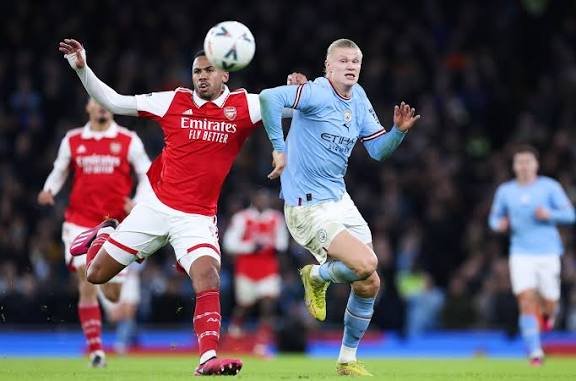

The 2013/2014 English Premier League season remains one of the most volatile and emotionally charged campaigns in modern football history. From Sir Alex Ferguson’s retirement leaving a power vacuum at Manchester United to Liverpool’s dramatic, slip-marred title charge, public emotion consistently ran at a fever pitch. In sports betting, odds are not merely objective reflections of statistical probability; they are deeply influenced by market demand and liability management. When millions of passionate supporters back their favorite teams based on hope rather than data, bookmakers must adjust their lines to balance the books. This dynamic created a fascinating disparity between public perception and statistical reality throughout the 2013/2014 season, illustrating how collective human psychology can actively warp financial markets.
Why Do Bookmakers Adjust Odds Based on Public Sentiment?
Bookmakers operate primarily as risk managers rather than pure predictors of sporting outcomes. Their fundamental goal is to secure a profit margin, often referred to as the overround or juice, by balancing the volume of wagers on all possible outcomes of an event. When an overwhelming majority of the public backs a single outcome, the bookmaker faces catastrophic financial liability if that outcome occurs. To mitigate this risk, oddsmakers artificially lower the payout for the popular selection while increasing the potential payout for the less popular side to attract counter-balancing wagers.
During the 2013/2014 season, the sheer volume of casual fans backing high-profile teams meant that public sentiment, rather than pure statistical probability, frequently dictated the opening and movement of betting lines. This phenomenon proved that the betting market is a psychological ecosystem where emotional capital directly influences financial pricing.
How Did the Manchester United Transition Expose the Power of Blind Loyalty?
The retirement of Sir Alex Ferguson ahead of the 2013/2014 season created an unprecedented psychological conflict for both fans and oddsmakers. For over two decades, Manchester United had been the dominant force in English football, establishing a deep-seated belief among supporters that the club was fundamentally invincible. Under David Moyes, however, the team suffered immediate structural regression, yet the betting public continued to wager on United as if the Ferguson era had never ended.
This cognitive inertia meant that Manchester United’s odds remained heavily suppressed throughout the first half of the season. Bookmakers knew that millions of loyal fans would back United at Old Trafford regardless of their poor form, forcing the market to price them as heavy favorites against mid-table opponents. Savvy contrarian bettors recognized this pricing inefficiency and capitalized on the inflated value of United’s opponents, demonstrating how blind loyalty can blind the market to structural decline.
What Made the 2013/2014 Liverpool Title Charge a Psychological Catalyst?
The Mechanics of the “Hope Rally”
Liverpool’s unexpected surge toward the Premier League title in the spring of 2014 provides a textbook study in momentum-driven market distortion. As Brendan Rodgers’ side embarked on an 11-game winning streak, an overwhelming wave of romanticism captured the public imagination. This emotional surge created what can be described as a psychological rally in the betting markets. Casual bettors, driven by the narrative of Steven Gerrard finally winning the league, flooded the market with “hope wagers.”
Scenario Comparison: Expectation vs. Reality
The financial implication of this collective euphoria became glaringly obvious in the closing weeks of the season, culminating in Liverpool’s infamous match against Chelsea at Anfield. Statistically, Chelsea under José Mourinho possessed a notoriously resilient defensive structure capable of nullifying Liverpool’s high-pressing attack. However, the emotional narrative surrounding Liverpool forced oddsmakers to price them as overwhelming favorites. The public ignored Chelsea’s tactical pedigree because they were blinded by the perceived inevitability of Liverpool’s fairytale ending, showcasing how narrative triumphing over tactical analysis creates highly inefficient odds.
How Does the Availability Heuristic Warping Mid-Table Value?
The availability heuristic is a cognitive bias where people judge the probability of an event based on how easily examples come to mind. In the context of the 2013/2014 Premier League season, high-scoring, media-darling teams like Tottenham Hotspur or Everton frequently occupied the public consciousness. Because their victories were widely broadcast and heavily discussed, the casual betting public systematically overestimated their likelihood of winning away matches against less glamorous opponents like Stoke City or Crystal Palace.
The historical data from that season reveals a distinct pattern: mid-table teams playing at home against “Big Six” opponents consistently offered immense value. Bookmakers, fully aware that the public would remember a spectacular goal by a star player rather than a gritty defensive display by an underdog, shaded the odds toward the famous clubs. This systemic undervaluation of defensive stability and home-field advantage highlighted how easily media exposure alters financial realities in sports gambling.
Where Does Emotional Hedging Intersect with Mathematical Reality?
The Practice of Mitigation
Emotional hedging occurs when a fan deliberately wagers against their own team to soften the psychological blow of a potential defeat. During the tense relegation battles of the 2013/2014 season, involving clubs like Sunderland, Norwich City, and Fulham, this psychological phenomenon reached its peak. Supporters of these embattled clubs routinely backed their opponents not because they believed their team would lose out of objectivity, but as a form of emotional insurance.
Evaluating how these emotional dynamics influenced betting behaviors requires analyzing the shift from physical betting shops to digital environments. When assessing the landscape of modern wagering, an individual might examine an established sports betting service to observe how real-time market adjustments occur. For instance, the digital platform operated under the name ufabet serves as a prime example of where massive volumes of public money interface directly with algorithmic odds. Within such digital interfaces, the sudden influx of emotional hedging capital from thousands of anxious supporters can cause rapid fluctuations in live odds, demonstrating how internal fan anxiety directly manifests as external market volatility.
Market Interpretation of Fan Anxiety
The resulting odds shifts created highly specific anomalies where the true probability of a team avoiding relegation was completely detached from the market price. When a fanbase collectively panics, their hedging behavior artificially defuses the odds of the opposing team, creating a situation where the mathematically correct play is to back the struggling team to survive. This pattern illustrates that tracking the emotional anxiety of a fanbase can be just as profitable as tracking player injuries or tactical shifts.
Why Did In-Play Betting Amplify Irrational Public Reactions?
The 2013/2014 season coincided with a massive technological boom in live, in-play betting, which served to accelerate the impact of fan psychology on odds movement. In-play betting strips away the deliberation of pre-match wagering, forcing fans to react instantly to unfolding events on the pitch. When a prominent team conceded an early goal, the emotional reaction from fans was often immediate panic, leading to irrational live wagering.
Because live odds algorithms are highly sensitive to sudden spikes in betting volume, these emotional reactions caused dramatic, short-term overcorrections in the pricing. A favorite conceding early would see their live odds skyrocket to an irrational degree, despite having ample time to recover and win the match. The immediacy of digital wagering platforms essentially monetized the immediate emotional impulses of the viewing audience, turning live matches into volatile psychological experiments.
When Do Public Bias Patterns Suffer Complete Structural Failure?
Public bias patterns in betting markets function predictably until they hit a threshold of total structural failure, which usually occurs during dead-rubber matches at the end of the season. In the final weeks of the 2013/2014 campaign, several highly rated teams had already secured their European positions or were mathematically safe from relegation, leaving them with little competitive motivation. Conversely, lower-tier teams were fighting desperately for survival or financial bonuses associated with final league positions.
Despite the clear divergence in motivation, the casual betting public continued to back the historically stronger teams based purely on name recognition. This led to a series of high-profile upsets where motivated underdogs defeated complacent giants. The failure of the public to account for motivational asymmetry proved that when the foundational assumption of a betting market—that both teams are trying equally hard to win—breaks down, fan psychology becomes a liability that leads to swift financial loss.
How Does Institutional Sophistication Counterbalance Fan Sentiment?
To understand the boundaries of public bias, one must analyze the counterbalancing force: sharp money, or the wagers placed by highly institutional, data-driven syndicates. While the casual public drives the market with emotion, professional bettors exploit these distorted lines by placing massive wagers on the mathematically undervalued sides. This push-and-pull dynamic creates a continuous stabilization process within the betting ecosystem.
This stabilization process is particularly visible when analyzing broader digital gaming environments that cater to diverse gambling behaviors. Looking at a modern casino online website, one can observe a similar structural tension between casual players chasing emotional highs and the rigid mathematical house edge. In sports betting markets, however, the professional syndicates act as the house, absorbing the inefficient liquidity generated by emotional fans. The 2013/2014 season highlighted that while fan psychology can successfully warp odds in the short term, the gravity of mathematical reality and institutional capital will always pull the market back toward true probability.
Summary
The 2013/2014 Premier League season offered a definitive proof of concept for behavioral finance within sports betting markets. Fan psychology—driven by historical loyalty to Manchester United, narrative-driven euphoria surrounding Liverpool, and emotional anxiety during relegation battles—consistently distorted opening and live betting odds. These distortions created predictable inefficiencies that rewarded objective, data-driven bettors at the expense of emotionally compromised supporters. Ultimately, the season demonstrated that sports betting lines are not a pure measure of athletic capability, but a dynamic reflection of human emotion, cognitive bias, and collective financial irrationality.